


Aalo: Fisheries Minister Gabriel D Wangsu has called for a comprehensive transformation of Arunachal Pradesh’s fisheries sector through modern technologies, scientific fish-farming practices and greater community participation.
Speaking at the first day of the two-day World Fisheries Day celebration in West Siang district on Saturday, Wangsu said fisheries must evolve from subsistence-based activity into viable enterprises that generate sustainable incomes. He urged farmers to move beyond conventional methods to raise production, productivity and income, and cautioned against spreading efforts across too many sectors without giving any one enterprise sustained attention.
Raising environmental concerns, the minister criticised destructive fishing practices in rivers, including the use of explosives, electrocution and bleaching agents, which threaten aquatic biodiversity. He appreciated community efforts to discourage such methods and stressed collective responsibility in protecting riverine resources.
Wangsu also expressed concern over persistent unemployment despite the district’s abundant resources, calling for greater determination and entrepreneurial commitment. He flagged the diversion of funds under government beneficiary-oriented schemes, which he said deprives genuine farmers of intended benefits, and urged beneficiaries to use assistance responsibly.
The programme, themed “Promoting Sustainable Fisheries for Livelihood, Nutrition and Economic Prosperity,” was organised by the West Siang Fisheries Cooperative Society Ltd, in collaboration with panchayati raj institutions and the district Fisheries Department.
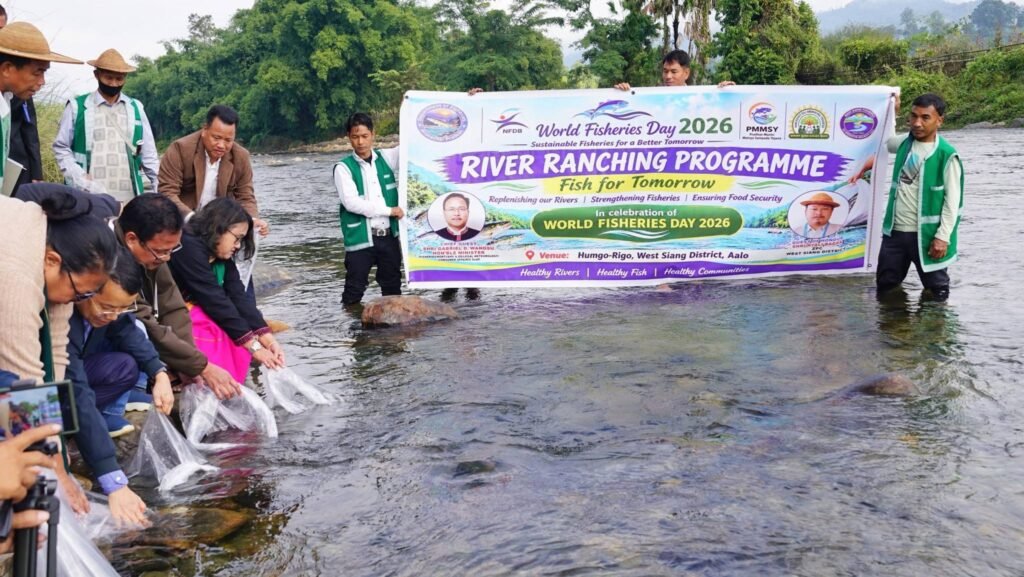
A highlight was a river ranching initiative at Humgo-Rigo aimed at conserving and replenishing aquatic resources. Pioneering and progressive fish farmers of the district were presented with mementoes and certificates.
The fish mela and exhibition featured fresh fish display and sale, fisheries technologies, successful farming models and technical demonstrations, along with awareness and capacity-building sessions. Government officials, cooperative society representatives, panchayati raj members, fish farmers and self-help groups took part.