


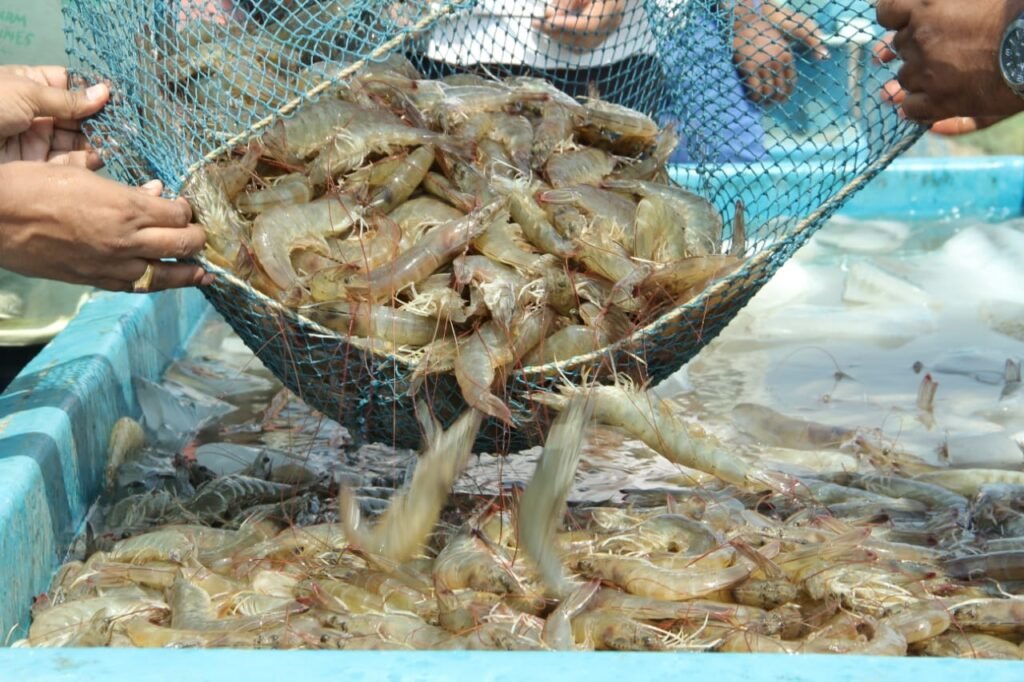
The worldwide shrimp market is on course to grow from USD 79.2 billion in 2026 to USD 137.9 billion in 2036, a compound annual growth rate (CAGR) of 5.7%, according to a new analysis by market research firm Fact.MR. The report credits the rise to stronger consumer appetite for protein-rich seafood, the spread of aquaculture, and better farming and cold chain systems. Buyers in retail and foodservice are also paying closer attention to sustainability and dependable supply.
Producers and processors are adjusting to buyers who now expect better quality, traceability and round-the-year availability. Farming is playing a bigger role in meeting commercial demand, and well-developed distribution networks link suppliers with restaurants, retailers, caterers and institutional buyers. Businesses that can deliver consistent quality while meeting food safety and sustainability standards stand to gain the most.
Farmed shrimp leads supply
Fact.MR expects aquaculture to supply 61.2% of the market in 2026, making it the largest source segment. Farming offers a steadier supply than wild catch alone, and intensive, semi-intensive, extensive and recirculating systems let producers match different buyer needs. For processors and distributors who must keep production lines running and fill bulk orders, reliable sourcing is critical. Better farm practices, quality management, and investment in infrastructure and cold chain logistics help preserve quality from farm to processing plant to market.
Pacific white shrimp dominates among species
Pacific white shrimp (Litopenaeus vannamei) is projected to command 44.6% of the market in 2026. Its popularity stems from how well it suits intensive, large-scale farming, and it is raised in both coastal and inland operations. The report also covers Trachypenaeus curvirostris, Pleoticus muelleri, Penaeus monodon, Acetes japonicus, Pandalus borealis and Penaeus chinensis, reflecting the variety of shrimp available to the trade.
Green head-on shrimp is the top product form
Green or head-on shrimp is forecast to hold 25.0% of the market in 2026, the largest share among product forms. Because it is minimally processed, it appeals to buyers who value freshness and flexibility in cooking, and restaurants and traditional seafood markets remain key outlets. Other forms tracked include green head-off, peeled, cooked and breaded shrimp, which serve varied needs in foodservice and retail. Careful handling and temperature control matter most for fresh and lightly processed products.
B2B channel holds the biggest share
Business-to-business sales are expected to account for 56.1% of demand in 2026, driven by hotels, restaurants, caterers and institutional buyers who purchase regularly and in bulk. Suppliers serving them must keep specifications, delivery schedules and food safety standards consistent. Business-to-consumer sales through hypermarkets, supermarkets, convenience and specialty stores, and online platforms reach households, giving producers several routes to market.
India and China drive regional growth
The report names Asia Pacific, North America and Europe as the main growth regions. Among the countries assessed, India is projected to grow fastest, at a CAGR of 6.6% through 2036. Its established farming base, coastal infrastructure and export-focused processing sector support the forecast, while better farm management, disease control and cold chain facilities are helping Indian producers meet overseas buyers’ requirements.
China is expected to grow at 6.2% a year, backed by large coastal and inland farming operations and strong domestic demand, with investment in processing, storage and traceability improving product consistency. Vietnam is projected at 5.8%, helped by its export-oriented industry and focus on certification and processing standards. The United States is forecast at 4.9%, followed by Spain (4.6%), Brazil (4.2%) and Japan (3.9%).
Technology and traceability gain importance
Producers are turning to technology to raise efficiency and manage risk. Real-time water quality monitoring, automated feeding and tighter biosecurity can improve yields and cut disease losses, which is especially important in intensive systems where outbreaks threaten output. At the same time, the industry faces environmental scrutiny, evolving compliance rules and swings in wild-catch availability. As buyers demand clearer information on where and how shrimp is produced, digital traceability and sustainability certifications are becoming more valuable, favouring companies that can show consistent quality and responsible sourcing.
Competitive landscape
The market includes farmers, processors and international distributors, who are working to strengthen their positions through supply chain integration, product development, sourcing practices and ties with foodservice and retail customers. Fact.MR profiles Thai Union Group PCL, Clearwater Seafoods, Avanti Feeds Limited, High Liner Foods, Surapon Foods Public Company Limited, Mazzetta Company LLC, Aqua Star, Nordic Seafood A/S, The Waterbase Limited and Wild Ocean Direct.
Among them, Thai Union operates across farming, processing and distribution, Clearwater Seafoods concentrates on premium seafood and sustainable harvesting, Avanti Feeds participates through aquafeed and shrimp farming solutions, and High Liner Foods supplies value-added seafood to retail and foodservice. The rest compete on processing capability, sourcing networks, specialty products and distribution partnerships.
Outlook
Continued demand for seafood protein and the maturing of aquaculture systems should keep the market growing. Expansion in India, China and Vietnam underlines the weight of production capacity and export infrastructure, while mature markets continue to sustain demand through retail and foodservice. Going forward, competitiveness will hinge on steady supply, effective disease management, dependable cold chains and transparent sourcing.
Source : https://www.factmr.com/