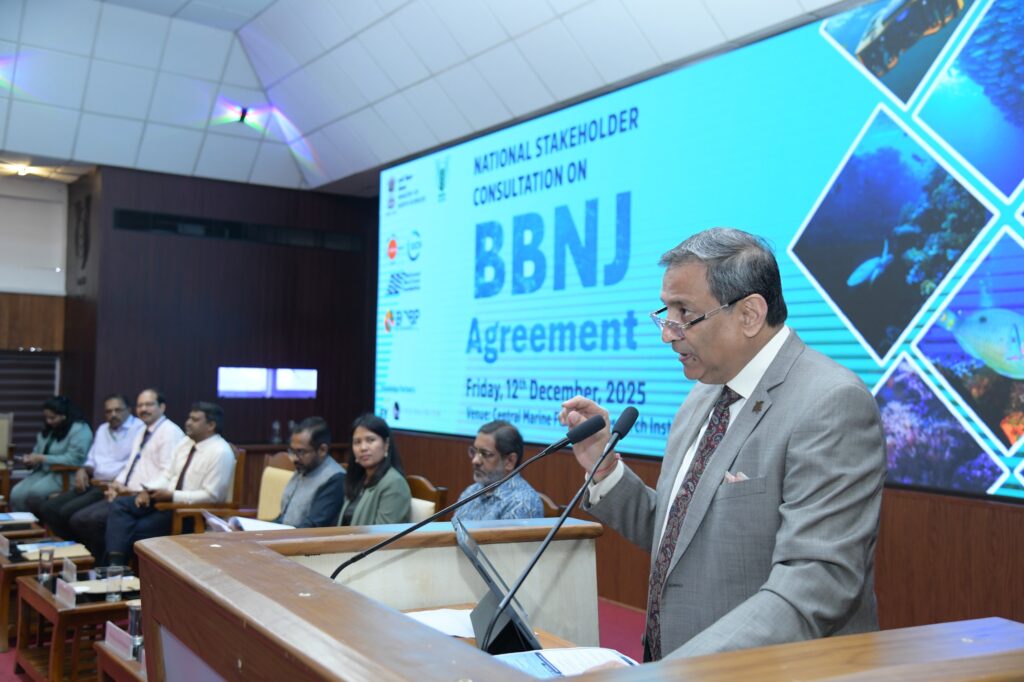
Kochi: As the Agreement under the United Nations Convention on the Law of the Sea (UNCLOS) on the Conservation and Sustainable Use of Marine Biological Diversity of Areas Beyond National Jurisdiction (BBNJ Agreement) popularly known as the High Seas Treaty is set to come into force on 17 January 2026, India has initiated shaping a domestic framework to support its ratification and future implementation.

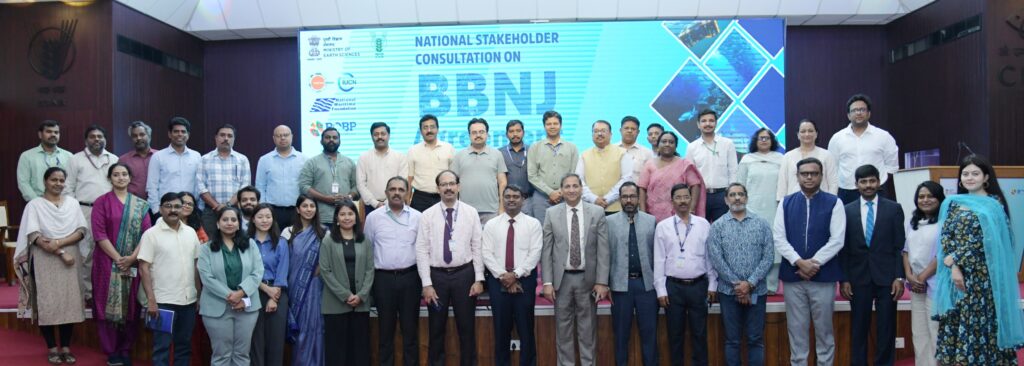
A national stakeholder consultation convened by the Ministry of Earth Sciences (MoES), in collaboration with ICAR–Central Marine Fisheries Research Institute (CMFRI), the Centre for Marine Living Resources and Ecology (CMLRE), and several domestic and international partners, discussed India’s preparedness in this direction.
The BBNJ Agreement, adopted in March 2023 under UNCLOS, is widely regarded as a landmark global instrument for conserving marine biodiversity in international waters. To date, 145 countries, including India, have signed the Agreement, and 76 have ratified it.
The consultation brought together policymakers, legal experts, scientists, representatives from the fisheries sector, and maritime industry stakeholders to assess the scientific, legal, and institutional mechanisms needed for effective implementation. Experts described the Treaty’s entry into force as a turning point for global ocean governance, enabling equitable access to high seas resources and strengthening conservation measures amid mounting pressures from climate change, overfishing, and marine pollution.
Inaugurating the consultation, Senior Advocate Sanjay Upadhyay remarked that the BBNJ Agreement presents a critical opportunity for India and other coastal nations to bridge longstanding governance gaps in biodiversity conservation beyond national jurisdiction. He highlighted the sensitivities involved in managing high seas biodiversity, ranging from ownership of marine genetic resources to environmental accountability. He also noted that the Treaty provides a structured framework to address these complexities while safeguarding national interests.
Dr P Krishnan, Director, Bay of Bengal Programme Inter-Governmental Organisation (BOBP-IGO), underscored India’s strong capabilities in ocean science and marine technology. He urged scientists to expand their engagement with ocean governance, maritime law, and high-seas management, calling the BBNJ Agreement “an opportunity to bring science, policy and law together.”
CMFRI Director Dr Grinson George highlighted the Treaty’s relevance to India’s fisheries, saying that activities in the high seas influence fish availability within India’s Exclusive Economic Zone, despite the country’s reliance on nearshore and small-scale fisheries.
Recommendations from the consultation will be consolidated in the coming weeks to support the formulation of India’s domestic roadmap ahead of the next Conference of the Parties, scheduled for August 2026.
Dr K. R. Sreenath, Dr George Ninan, Rizza Sacra Dejucos, Priya Tayde, and P K Srivastava also addressed the gathering, providing valuable insights into India’s interests in ratifying the Agreement and shaping the discourse on marine conservation in the high seas.